How Commercial & Apartment Solar Benefits Property Owners
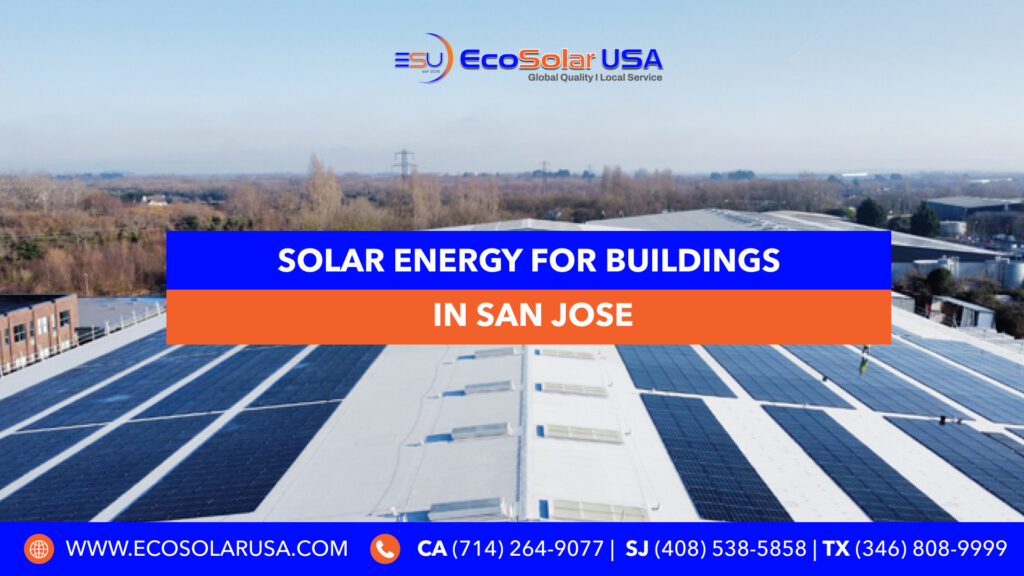
As electricity costs continue to rise across California, more San Jose property owners, apartment managers, and commercial building investors are turning to solar energy for buildings as a smart, long-term solution. Solar power is no longer just for single-family homes—it is now widely used in apartment buildings, multifamily communities, and commercial properties throughout San Jose and Silicon Valley.
In this guide, we explain how solar energy is used in apartment and commercial buildings, the key benefits for San Jose property owners, and the solar incentives and tax credits that can cover up to 50% of system costs when projects are timed correctly.
How Solar Energy Is Used in Apartment & Commercial Buildings in San Jose
1. Rooftop & Carport Solar Installations for Buildings
The most common application of commercial solar systems in San Jose is through photovoltaic (PV) panels installed on:
- Rooftops
- Parking carports
- Shade structures
For apartment buildings and commercial properties, solar energy is typically used to offset electricity for:
- Common areas (hallways, elevators, lobbies)
- Exterior and security lighting
- Laundry rooms
- Leasing and property management offices
- Access control and surveillance systems
San Jose’s strong year-round sunlight makes solar panels for apartment buildings highly efficient.
2. Solar Power for Common Areas & Building Operations
Many multifamily and mixed-use properties in San Jose connect solar systems to a house meter, allowing owners to reduce electricity costs for shared spaces. This helps:
- Lower monthly operating expenses
- Increase net operating income (NOI)
- Reduce exposure to rising PG&E utility rates
Even partial solar installations for commercial buildings can generate substantial savings.
3. Solar Energy for Individual Apartment Units
Some San Jose apartment buildings extend solar benefits directly to tenants through:
- Sub-metering
- Virtual Net Energy Metering (VNEM)
- Solar-inclusive utility programs
This approach improves tenant satisfaction and helps solar-powered rental properties stand out in competitive markets.
4. Solar + Battery Storage for Commercial Buildings
Many San Jose building owners pair solar systems with battery storage to:
- Store excess solar energy produced during the day
- Reduce peak-hour electricity charges
- Provide backup power during outages
In California, solar plus battery storage improves energy reliability and resilience.
5. Solar-Powered EV Charging Stations
With EV adoption growing across the Bay Area, more properties are installing solar-powered EV charging stations. This allows San Jose property owners to:
- Offer modern, high-demand amenities
- Reduce grid dependency
- Support California clean transportation goals
Benefits of Commercial Solar for San Jose Property Owners
1. Lower Energy Costs & Long-Term Savings
Solar systems generate electricity on-site, significantly reducing utility bills. In high-cost markets like San Jose, this means predictable energy costs for 25–30 years.
2. Increased Property Value
Properties with solar panels in San Jose are more attractive to buyers and renters. Solar-equipped buildings often:
- Sell faster
- Command higher resale values
- Justify premium rents
- Increase long-term asset value
3. Protection Against Rising Utility Rates
Solar energy for buildings acts as a hedge against rising electricity costs by reducing reliance on the grid.
4. Lower Operating Costs for Rental Properties
For landlords and multifamily property owners, solar offsets energy usage in:
- Common areas
- Exterior lighting
- Shared amenities
Lower operating costs directly improve profitability.
5. Energy Independence & Reliability
When paired with batteries, commercial solar systems can:
- Provide backup power during outages
- Support essential building operations
- Increase resilience during grid disruptions
6. Environmental Responsibility & Tenant Appeal
Solar energy reduces carbon emissions and supports California sustainability goals. Environmentally conscious tenants in San Jose increasingly prefer solar-powered buildings.
Solar Tax Credits & Incentives for Commercial Buildings in San Jose
Federal Solar Tax Credit (ITC) – 30%
Commercial and multifamily property owners can qualify for a 30% Federal Investment Tax Credit (ITC) for:
- Solar panels
- Inverters
- Racking and installation
- Battery storage installed with solar
Example:
A $200,000 commercial solar system may qualify for a $60,000 tax credit, reducing the net cost to $140,000.
How Property Owners Can Achieve Up to ~50% Total Solar Benefits
In addition to the ITC, San Jose commercial solar projects may qualify for:
- Accelerated Depreciation (MACRS)
- Bonus tax credits (domestic content, energy community, or low-income adders)
When combined, solar tax credits and depreciation can offset up to 45–50% of total project costs, depending on tax structure.
Important Timeline to Secure Maximum Solar Incentives
- ✅ Now through 2032: Full 30% ITC available
- ⚠️ After 2032: Credit scheduled to step down
Starting early helps San Jose property owners lock in today’s highest solar incentives.
Conclusion: Solar Energy for Buildings Is a Smart Investment in San Jose
Solar energy is transforming how San Jose apartment buildings, commercial properties, and multifamily developments operate. From powering common areas and EV chargers to increasing property value and reducing operating costs, solar delivers long-term financial and environmental benefits.
With current incentives allowing owners to recover up to half of system costs, now is one of the best times to invest in commercial solar in San Jose.
For property owners, solar isn’t just an energy upgrade—it’s a long-term investment strategy.
Commercial Solar Tax Credits 2026: Federal Incentives for Businesses
The 2026 federal solar tax credit remains one of the most powerful financial incentives available for commercial solar projects. While residential incentives have shifted, businesses can still take advantage of substantial federal Investment Tax Credits (ITC) — including stackable bonus credits that may increase total savings to as much as 50% of project costs.
With updated compliance requirements, new FEOC rules, and critical construction deadlines approaching, understanding how these incentives work is essential for maximizing return on investment.
Base Federal Investment Tax Credit (ITC) – 30%
Under the Inflation Reduction Act, commercial solar projects qualify for a 30% federal Investment Tax Credit (ITC).
Eligible costs include:
- Solar panels and inverters
- Balance of system components
- Labor and installation
- Engineering and permitting
- Battery storage systems (when eligible)
This base 30% credit applies to businesses, nonprofits (via direct pay), municipalities, schools, agricultural operations, and industrial facilities.
Commercial Bonus Credits (Stackable)
Eligible projects can increase the value of the ITC by stacking bonus credits:
Domestic Content Bonus (+10%)
Projects that use U.S.-manufactured solar panels and qualifying components may qualify for an additional 10% credit.
To qualify:
- Steel and iron must be produced in the United States
- A required percentage of manufactured components must be domestically produced
- Documentation must verify supply chain compliance
This bonus supports domestic solar manufacturing and strengthens energy independence.
Energy Community Bonus (+10%)
Projects located in qualifying energy communities may receive an additional 10% credit.
Eligible locations typically include:
- Fossil-fuel-dependent communities
- Brownfield sites
- Areas with significant employment tied to coal, oil, or natural gas industries
This incentive supports economic transition in historically energy-dependent regions.
Low-Income Community Bonus (+10–20%)
Available for qualifying projects serving or located in low-income areas through a federal application process.
Projects may receive:
- +10% for qualifying low-income communities
- +20% for certain qualified low-income residential or economic benefit projects
This allocation is limited annually and requires approval through a federal application program.
Maximum Potential Credit
When stacked strategically, businesses may qualify for:
- 30% Base ITC
- +10% Domestic Content Bonus
- +10% Energy Community Bonus
- +10–20% Low-Income Community Bonus
👉 Up to 50 percent of total project costs
For example, a $1,000,000 commercial solar installation could potentially receive up to $500,000 in total federal tax credits, depending on eligibility.
New FEOC Rules: Supply Chain Compliance Is Critical
Beginning in 2026, projects must also comply with Foreign Entity of Concern (FEOC) sourcing requirements.
FEOC rules restrict tax credit eligibility for projects that rely heavily on components manufactured or supplied by entities tied to certain foreign governments.
Key considerations:
- Minimum non-FEOC component thresholds apply
- Compliance percentages increase in future years
- Failure to meet FEOC requirements may disqualify the project from the ITC
Supply chain documentation and early equipment selection are now essential to preserving eligibility.
Critical 2026–2027 Deadlines
To qualify for the full 30% credit and preserve bonus eligibility:
- Projects should begin construction before key federal deadlines
- Systems must meet placed-in-service requirements
- Prevailing wage and apprenticeship standards must be satisfied
Missing deadlines or compliance requirements can significantly reduce total credit value.
Why Businesses Should Act Now
Utility costs continue to rise, and federal solar incentives are becoming more compliance-driven. Acting early allows businesses to:
- Lock in equipment that meets domestic content and FEOC standards
- Secure bonus eligibility
- Preserve maximum ITC value
- Improve long-term energy ROI
The 2026 federal solar tax credit still presents a major opportunity — but careful planning and early execution are essential.
Contact EcoSolar USA Offices
Have questions about Commercial Solar Tax Credits 2026, FEOC compliance, or commercial solar planning? Contact our California or Texas office below.
EcoSolar USA Texas Office
📍 11602 Bellaire Blvd
Houston, TX 77072
📞 (346) 808-9999
📧 Info.tx@ecosolarusa.com
🗺 Google Maps:
https://maps.app.goo.gl/BeZU8FqzUy9pdQq49
Location: 11602 Bellaire Blvd
EcoSolar USA Orange County Office (California)
📍 13902 Harbor Blvd., Unit 2A
Garden Grove, CA 92843
📞 (714) 265-9077
📱 (408) 538-5858
📧 info@ecosolarusa.com
🗺 Google Maps:
https://maps.app.goo.gl/mjZtaWrQQEX1Rcyo8
Location: 13902 Harbor Blvd Unit 2A