For business owners and commercial building owners in California, 2026 isn’t just another year — it’s a strategic turning point for commercial solar investment. With electricity rates continuing to rise faster than inflation and commercial energy costs among the highest in the nation, solar energy offers a compelling way to control expenses, protect margins, and increase property value.
Let’s look at the data driving this shift.
📈 Commercial Electricity Rates Are High and Rising in California
California’s electricity costs are significantly above the national average — especially for commercial users:
- The average commercial electricity price in California was about 25.26 ¢/kWh for the year ended November 2024, more than 113 % higher than the U.S. average of about 11.86 ¢/kWh in other states. Center for Jobs
- This high pricing translates into billions more paid by California businesses and industrial users compared to other states — commercially and industrially, California consumers paid over $21 billion more in electricity costs than ratepayers elsewhere, using the same amount of energy. Center for Jobs
- Over the past decade, California’s electricity prices climbed dramatically — nearly doubling (96 % increase) between 2014 and 2024. EnergySage
💡 Put simply: for business owners and building owners, high commercial electricity costs are already a significant operational expense — and they keep heading upward.
🔥 Commercial Electricity Trends in Texas: Lower but Volatile
It’s also helpful to compare to another major business hub, Texas:
- Texas traditionally has had lower average commercial electricity rates (around 8.68 ¢/kWh in earlier reports), which is roughly 29 % below the national average. Reddit
- However, wholesale prices and peak demand spikes have been reported at high levels, reflecting grid pressure and cost volatility due to weather and demand surges. energyprofessionals.com
While Texas often shows lower average rates than California, its price volatility and peak demand spikes still pose cost uncertainty for commercial users — adding to the risk of relying solely on grid energy.
📊 The Broader National Context: Rising Power Prices
The trend toward higher electricity prices isn’t unique to California:
- The U.S. Energy Information Administration (EIA) projected higher wholesale electricity prices in 2025, with regions such as California and the Southwest expected to see prices 30 %–35 % above previous levels due to demand surges, grid congestion, and generation cost pressures. energyprofessionals.com
These rising costs show that energy is becoming one of the biggest unpredictable expenses for businesses, making solar a smart alternative rather than a luxury.
🎯 Why 2026 Is the Right Time to Go All-In on Commercial Solar
Given the data above, here’s why 2026 should be the year you commit to commercial solar energy:
💡 1. Offset High and Rising Electricity Costs
With commercial rates more than double the national average in California, every kWh generated by solar is money kept in your business instead of sent to the utility. Center for Jobs
🏢 2. Hedge Against Market Volatility
Electricity price spikes — whether due to grid stress, heat waves, infrastructure upgrades, or regulatory changes — continue to threaten business budgets. Solar provides predictable energy costs.
💰 3. Maximize Financial Incentives Before They Evolve
Federal and state solar incentives — such as tax credits and accelerated depreciation — often have sunset dates or phase-downs tied to when construction starts. Acting early in 2026 ensures maximum financial benefit.
📈 4. Improve Property Value and Tenant Appeal
Solar systems reduce operating costs and strengthen green credentials — a top priority for many tenants choosing office, retail, or industrial space.
🌱 5. Strengthen Sustainability and Stakeholder Trust
Customers, partners, and investors increasingly reward environmentally proactive businesses. Solar energy demonstrates real, measurable commitment to sustainability.
Types of Commercial Solar Investments for Business Owners & Building Owners (With Cost Examples)
Not all commercial solar projects are the same. In California, business owners and building owners can choose from several types of commercial solar systems depending on their property, energy usage, and financial goals.
Below are the most common commercial solar investment options, with realistic cost ranges to help with planning.
1. Rooftop Commercial Solar (Most Common)
Best for:
Office buildings, retail centers, warehouses, manufacturing facilities, medical buildings, schools
How it works:
Solar panels are installed on unused roof space to offset electricity used by the building or business.
Why business owners choose it:
- Uses existing space
- No land acquisition required
- Directly reduces monthly operating expenses
Typical system size:
50 kW – 500 kW+
Estimated cost (before incentives):
- ~$2.00 – $2.80 per watt
- Example:
- 100 kW system → $200,000 – $280,000
- 250 kW system → $500,000 – $700,000
- 100 kW system → $200,000 – $280,000
After tax credits and depreciation, net costs can be reduced significantly, often by 30–50% depending on structure.
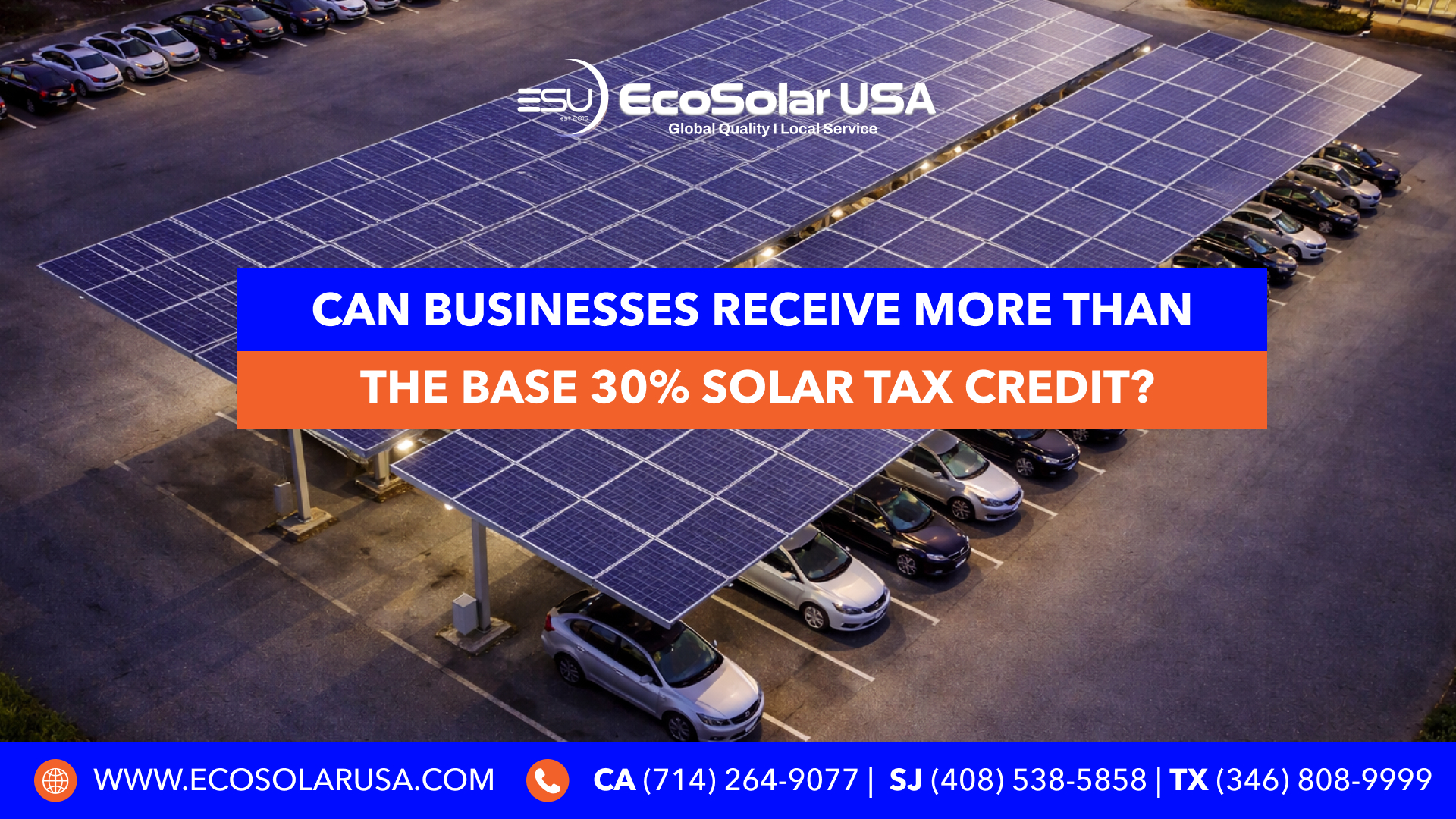
2. Carport & Solar Canopy Systems
Best for:
Shopping centers, offices, hospitals, schools, large parking lots
How it works:
Solar panels are mounted above parking spaces, providing shade and energy generation at the same time.
Why building owners invest in it:
- Adds value without touching the roof
- Improves tenant and customer experience
- Ideal for future EV charging integration
Typical system size:
100 kW – 1 MW+
Estimated cost (before incentives):
- ~$3.00 – $4.50 per watt
- Example:
- 200 kW system → $600,000 – $900,000
- 200 kW system → $600,000 – $900,000
While carports cost more than rooftop solar, they often deliver higher property value and branding benefits.
3. Ground-Mounted Commercial Solar
Best for:
Industrial facilities, agricultural businesses, large landowners, warehouses with adjacent land
How it works:
Panels are installed on the ground instead of the roof.
Why some business owners prefer it:
- Easier maintenance access
- No roof limitations
- Flexible system expansion
Typical system size:
250 kW – Multiple MW
Estimated cost (before incentives):
- ~$1.80 – $2.50 per watt
- Example:
- 500 kW system → $900,000 – $1,250,000
- 500 kW system → $900,000 – $1,250,000
Ground-mounted systems often provide the lowest cost per watt when land is available.
4. Solar + Battery Storage (Hybrid Systems)
Best for:
Businesses with high demand charges, critical operations, or outage concerns
How it works:
Batteries store excess solar energy for use during peak hours, outages, or high-rate periods.
Why California business owners invest:
- Reduce peak demand charges
- Improve energy reliability
- Protection during grid outages and PSPS events
Estimated battery cost (added to solar):
- ~$800 – $1,200 per kWh of storage
Example:
- 200 kW solar + 400 kWh battery
→ Additional $320,000 – $480,000 for storage (before incentives)
While batteries increase upfront cost, they can significantly improve long-term savings and resilience.
5. Ownership vs. Financing Options
Commercial solar is not one-size-fits-all financially. Business owners and building owners in California typically choose:
- Cash purchase – highest long-term return
- Solar loan – preserve capital, immediate savings
- PPA (Power Purchase Agreement) – little to no upfront cost, pay for power produced
- Lease – predictable payments, lower upfront cost
Each structure impacts tax benefits, ROI, and balance sheets differently, which is why professional analysis matters.
Why 2026 Is the Ideal Year to Act
With:
- Rising commercial electricity rates in California
- Time-sensitive incentives
- Predictable long-term ROI
- Multiple system and financing options
2026 is the year business owners and building owners should invest strategically — not cautiously — in commercial solar.
☀️ Get a Custom Commercial Solar Cost & ROI Analysis from EcoSolar USA
Every commercial property is different. The right solar system — and the right investment structure — depends on your building, usage, and goals.
EcoSolar USA helps California business owners and building owners:
✔ Identify the best type of commercial solar system
✔ Estimate real project costs and savings
✔ Maximize tax credits and incentives
✔ Design systems built for long-term performance
📞 Contact EcoSolar USA today for a customized commercial solar consultation and see which solar investment makes the most sense for your business or building.