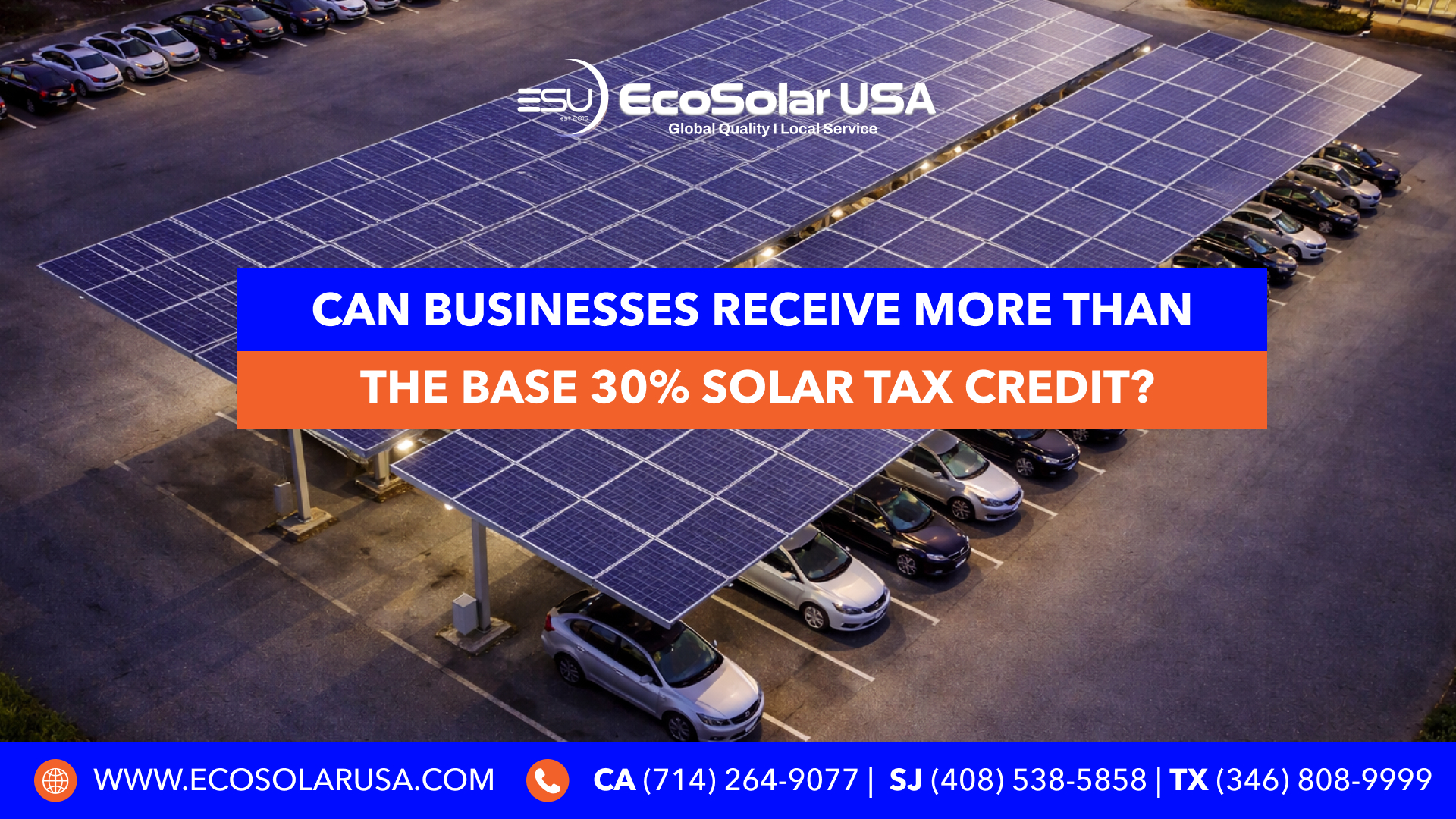
Commercial building owners across the U.S. are facing a critical deadline. Federal solar incentives that have made large-scale solar projects financially attractive are approaching a major turning point in 2026. If you’ve been considering installing solar on your commercial property, office complex, warehouse, or industrial facility — now is the time to act.
Delaying could mean losing access to significant federal tax savings.
What Is the 2026 Solar Tax Credit Cliff?
The federal solar Investment Tax Credit (ITC), expanded under the Inflation Reduction Act, currently allows eligible commercial solar projects to claim a 30% base tax credit on total installation costs.
However, upcoming policy changes, compliance rules, and construction deadlines could reduce eligibility or eliminate bonus credits for projects that are not started in time.
This expected reduction in available incentives is often referred to as the “tax credit cliff.”
Why 2026 Is a Critical Year for Commercial Solar
To secure the full 30% federal tax credit and preserve eligibility for bonus incentives, commercial projects must meet strict construction and compliance requirements.
Key factors include:
- Meeting “begin construction” deadlines
- Placed-in-service deadlines
- Prevailing wage and apprenticeship requirements
- Foreign Entity of Concern (FEOC) sourcing compliance
- Domestic content thresholds
Projects that fail to meet these standards risk losing bonus credits — or potentially the full tax incentive.
How Much Is at Stake?
Currently, eligible commercial solar projects can claim:
- 30% Base ITC
- +10% Domestic Content Bonus
- +10% Energy Community Bonus
- +10–20% Low-Income Community Bonus
👉 Maximum potential incentive: Up to 50% of total project costs
For a $2 million commercial solar installation, that could mean up to $1 million in federal tax credits.
If the tax credit phases down or eligibility tightens further in 2026 and beyond, those savings may shrink significantly.
Rising Energy Costs Make Waiting Risky
In addition to potential tax credit reductions, commercial building owners are facing:
- Increasing utility rates
- Grid reliability concerns
- Demand charge volatility
- Pressure to meet ESG and sustainability goals
Solar installation allows building owners to:
- Stabilize long-term operating costs
- Increase net operating income (NOI)
- Improve property valuation
- Attract sustainability-focused tenants
The longer you wait, the more utility costs you absorb without offsetting them with solar production.
FEOC Compliance: A New Layer of Complexity
Beginning in 2026, projects must also comply with Foreign Entity of Concern (FEOC) restrictions. These rules limit the use of certain foreign-manufactured components in systems claiming federal tax credits.
Failure to meet sourcing requirements could disqualify your project from the ITC entirely.
Early procurement planning and working with experienced installers is essential to ensure:
- Compliant equipment sourcing
- Proper documentation
- Timely construction milestones
Safe Harbor Strategy: Lock in Your Credit
Many commercial developers are using “safe harbor” strategies to secure eligibility before deadlines.
Safe harbor can involve:
- Beginning construction
- Incurring a required percentage of project costs
- Securing equipment orders
Proper documentation is critical to ensure IRS compliance.
Waiting until late 2026 may leave you competing for limited equipment supply and contractor availability.
Who Should Act Now?
Commercial property owners who should prioritize action include:
- Office building owners
- Industrial and manufacturing facilities
- Retail shopping centers
- Cold storage facilities
- Warehouses and logistics centers
- Agricultural processing buildings
- Multi-tenant commercial properties
If your building has usable roof space or adjacent land, solar may provide immediate financial benefit.
Why Early Planning Matters
Solar projects often require:
- Structural evaluation
- Utility interconnection approval
- Engineering and permitting
- Equipment procurement
- Financing coordination
Starting the process now ensures you:
- Lock in full federal incentives
- Avoid supply chain bottlenecks
- Meet compliance requirements
- Maximize long-term ROI
Waiting until the final months before the tax credit cliff increases risk and cost.
Act Now to Preserve Your Federal Solar Incentives
The 2026 tax credit cliff is approaching. Commercial building owners who act early can secure:
- Up to 50% in federal incentives
- Lower operating expenses
- Increased asset value
- Long-term energy stability
Those who delay may face reduced credits, tighter compliance rules, and higher project costs.
📞 Contact Ecosolar USA Today
If you own a commercial building in California or Texas, our team can help you:
- Evaluate your eligibility
- Calculate projected tax savings
- Develop a safe harbor strategy
- Ensure FEOC compliance
- Design and install a compliant solar system
🇺🇸 Orange County Office
📍 13902 Harbor Blvd., Unit 2A
Garden Grove, CA 92843
📞 (714) 265-9077
📱 (408) 538-5858
📧 [email protected]
Location: 13902 Harbor Blvd Unit 2A
🤠 Texas Office
📍 11602 Bellaire Blvd
Houston, TX 77072
📞 (346) 808-9999
📧 [email protected]
Location: 11602 Bellaire Blvd