For many commercial property owners, the parking lot is one of the least optimized assets on the site. While it is essential for tenant access, customer convenience, and building code requirements, most parking lots generate no revenue, offer limited functionality, and consume high operating costs for lighting, security, and maintenance.
But today, commercial building owners in California and across the U.S. are transforming parking lots into high-value assets—not just empty paved space.
The most effective and profitable way to optimize your parking lot?
Solar carports + parking area enhancements.
Solar carports turn your parking lot into a power-generating, cost-saving, and tenant-attracting asset that increases your building’s value and NOI (Net Operating Income).
Below, we break down how to optimize your parking lot area, why solar carports are one of the highest-ROI property upgrades, and how owners can leverage massive tax incentives before they expire.
The Problem: Most Parking Lots Are Cost Centers, Not Assets
A typical commercial parking lot requires:
- Nighttime lighting
- Security cameras
- Landscaping power
- EV charging infrastructure
- Regular resurfacing and maintenance
These are operating expenses, not revenue generators.
In many properties, the parking lot consumes 20–40% of common area electricity, increasing CAM (Common Area Maintenance) costs.
For building owners, this represents a major opportunity to convert an underutilized area into a powerful financial tool.
Solar Carports: The Most Valuable Way to Optimize Your Parking Lot
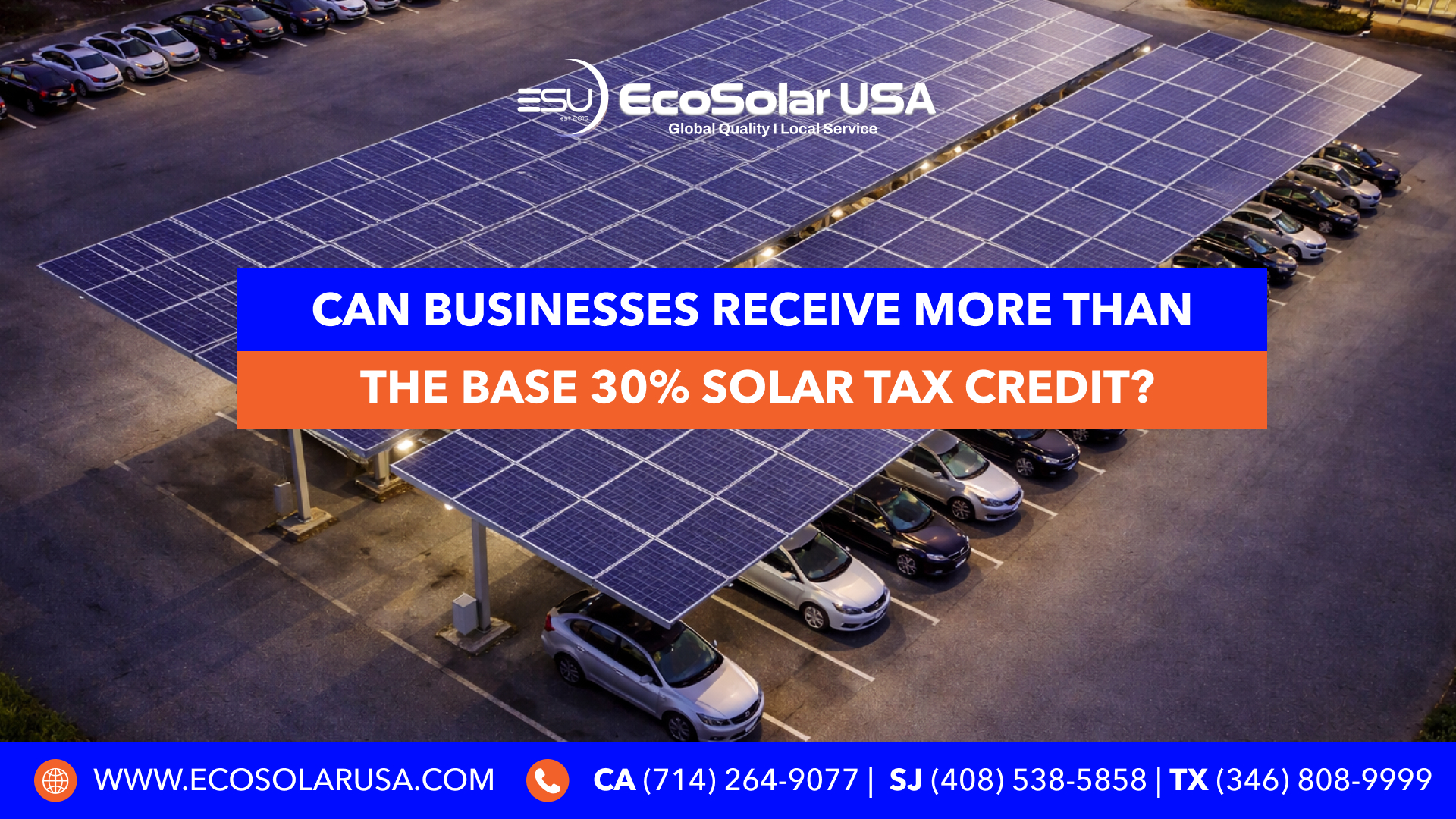
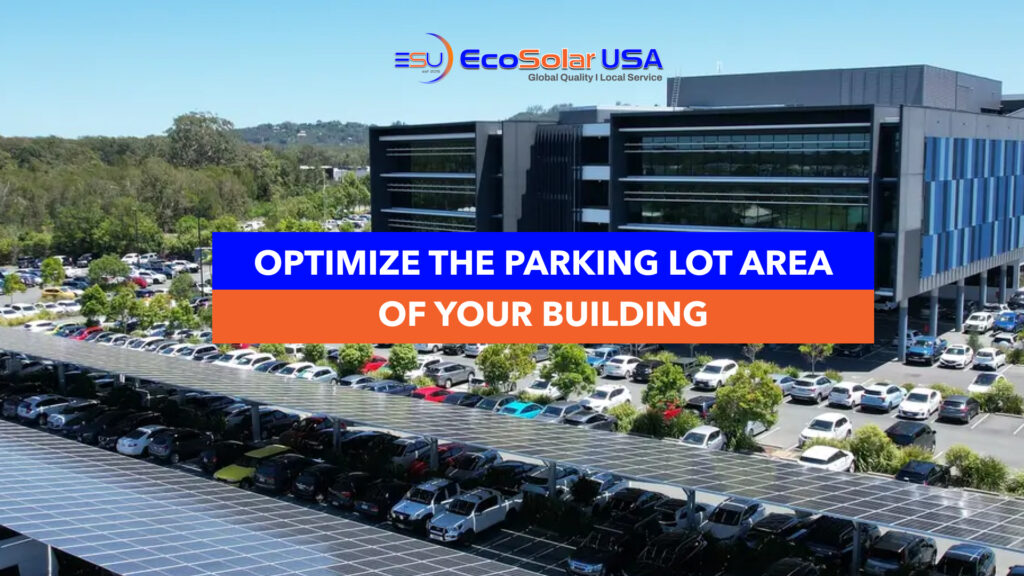
Installing solar carports over your parking lot turns unused airspace into clean energy production—without touching the building roof.
Key Benefits:
1. Reduce Electricity Costs by 30–60%
Solar carports generate energy that offsets:
- Parking lot lighting
- Building HVAC
- Common-area power
- Tenant meters (if structured that way)
For many properties, this means $50,000–$150,000/year in savings.
2. Lower CAM Costs for Tenants
Retail centers, office parks, and industrial buildings all pass CAM fees to tenants.
Solar reduces:
- Lighting costs
- Demand charges
- Outdoor and common-area power usage
This results in lower CAM, happier tenants, and improved retention.
3. Increase Property Value
Higher NOI = higher building valuation.
Example
If solar saves $80,000/year, and your market cap rate is 6%:
$80,000 ÷ 0.06 = $1.33 million increase in property value
Solar carports often add $1M–$3M+ in property value depending on center size.
4. Provide Shade and Improved Customer Experience
Solar carports:
- Keep cars cooler by 20–30°F
- Improve shopper comfort
- Attract tenants who value sustainability
- Reduce parking lot heat island effect
- Improve aesthetics and curb appeal
This makes your property more attractive to tenants and visitors.
5. Add EV Charging Capabilities
EV adoption is booming, and tenants increasingly expect convenient charging on-site.
Solar carports easily integrate:
- Level 2 chargers
- Fast DC chargers
- Tenant-billed EV charging
- Public-billed EV revenue
This creates a new revenue stream and increases tenant satisfaction.
Financial Benefits: Solar Carports Qualify for Major Tax Incentives
One of the biggest advantages of optimizing your parking lot with solar is access to massive federal tax credits, including:
1. 30% Federal Solar Investment Tax Credit (ITC)
All solar carport installations qualify.
2. Bonus Credits (stackable)
Depending on your location, your parking lot solar may also qualify for:
- +10% Energy Community Bonus
- +10% Low-Income Community Bonus
- +20% Additional Low-Income Bonus (if eligible)
Total available credit can reach 40–60%, depending on the site.
3. MACRS + Bonus Depreciation
Owners can deduct 60–70% of system cost in Year 1.
Example Financial Breakdown
Solar carport cost: $1,000,000
- 30% ITC = $300,000
- 10% Energy Community Bonus = $100,000
- Depreciation tax benefit = $180,000
Total Year-1 tax benefits ≈ $580,000
Net cost ≈ $420,000
Annual savings ≈ $90,000–$150,000
This makes solar carports one of the highest-return commercial upgrades available to property owners today.
Crucial Timeline: Incentives Will Not Last Forever
- 30% ITC only guaranteed through 2032
- Drops to 26% in 2033, 22% in 2034
- Energy Community & Low-Income Bonuses are limited and competitive
- Bonus depreciation decreases every year until 2027
To lock in today’s best savings:
✔️ Start construction (or pay 5% safe harbor) before December 31
✔️ Complete the project within 4 years to keep the credit rate
✔️ Apply early for Low-Income Bonus allocations
The sooner owners act, the more they save.
Other Ways to Optimize Parking Lot Areas
In addition to solar, building owners are also enhancing parking lots through:
1. Upgraded LED Lighting
Cuts lighting energy costs by 50–80%
Improves visibility + reduces security risks
2. Smart Parking Sensors & Systems
Improves flow, security, and management
3. EV Charging Integration with Solar
Adds revenue, attracts tenants
4. Landscape Electrification
Switching outdoor systems to solar or battery-powered
5. Stormwater Management Enhancements
Reduces long-term maintenance costs
These upgrades pair perfectly with solar carports for maximum impact.
Conclusion
Your parking lot is more than paved space—it’s a powerful opportunity to:
- Reduce operating expenses
- Lower CAM charges
- Increase property value
- Add EV charging revenue streams
- Improve tenant satisfaction
- Boost sustainability and ESG appeal
- Secure major federal tax incentives
Solar carports transform the parking lot from a cost burden into a high-ROI asset that pays for itself today and increases the competitiveness of your property for years to come.