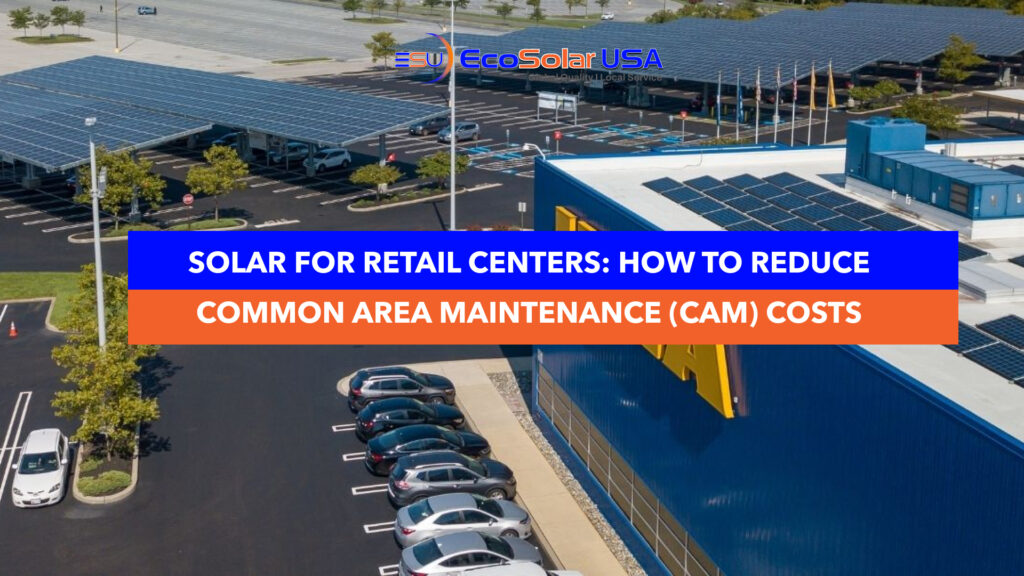
Retail centers across California are facing rising operating costs, stricter tenant budgets, and increased pressure to stay competitive. One of the largest—and most unpredictable—expenses owners face is Common Area Maintenance (CAM) costs, especially electricity for parking lot lighting, signage, HVAC for common areas, and exterior power needs.
As energy rates continue to rise in California, retail owners are turning to one strategy that delivers immediate, long-term CAM savings:
Commercial solar + energy storage.
In this guide, we’ll break down how solar helps retail center owners reduce CAM charges, improve tenant retention, increase property value, and secure major tax incentives before they expire.
Why CAM Costs Are a Growing Problem for Retail Centers
CAM costs typically cover:
- Parking lot lighting
- HVAC for shared indoor areas
- Security cameras and systems
- Water pumps and outdoor power
- Elevators and escalators
- Outdoor signage and monument signs
In most shopping centers, CAM is passed through to tenants—meaning CAM directly impacts tenant satisfaction and renewals.
Here’s why solar matters:
California utility rates have increased 8–12% per year, and are expected to continue rising because of:
- Wildfire mitigation expenses
- Grid upgrades
- Renewable energy mandates
- High demand charges
Tenants are feeling the pressure, especially restaurants, salons, gyms, and small businesses operating in retail centers.
How Solar Reduces CAM Expenses
Commercial solar directly offsets common area utility usage—the very expenses that make up CAM charges.
Typical CAM electricity usage for a 50,000–100,000 sq ft retail center:
- $60,000–$120,000 per year
- Lighting and parking lot alone can account for 30–45% of this energy load
- Demand charges (peak usage fees) make up 40–60% of total electricity costs
Solar reduces both energy consumption and demand charges, resulting in lower CAM for all tenants.
Average CAM Savings After Going Solar
Based on similar retail centers in California:
- 30%–60% reduction in common area electricity costs
- Up to 50% reduction in demand charges
- $30,000–$70,000 annual savings for medium-sized retail centers
- Centers with carport solar can offset 70%+ of total CAM usage
These savings are shared across tenants, improving satisfaction and increasing renewal rates.
Solar Helps Retail Centers Stay More Competitive
Low CAM = happier tenants.
Happier tenants = less turnover.
Less turnover = more income consistency for owners.
Solar helps owners:
- Attract tenants with lower CAM fees
- Improve lease-up for vacant spaces
- Differentiate from competing centers
- Offer predictable, stable CAM rates
- Stabilize NOI during periods of high utility inflation
With many retail tenants operating on thin margins, CAM savings can be the difference between staying or leaving.
How Solar Increases Property Value
Solar does more than reduce expenses—it increases NOI, which directly increases property value.
Example:
If solar saves $60,000/year in CAM power costs, and the market cap rate is 6%:
$60,000 ÷ 0.06 = $1,000,000 increase in property value
That’s a $1M boost in valuation simply by reducing CAM.
If solar carports generate more savings or increase occupancy, the property value increases even further.
Major Tax Incentives for Retail Center Owners
Retail centers qualify for powerful federal incentives, which dramatically reduce the net cost of going solar.
1. 30% Federal Solar Investment Tax Credit (ITC)
Every retail center qualifies for a 30% tax credit on total project cost.
2. Bonus Credits (stackable)
Commercial properties in certain locations qualify for:
- +10% Energy Community Bonus
- +10% Low-Income Community Bonus
- +20% Additional Low-Income Bonus (for certain project types)
Depending on location, retail center owners may qualify for 40–60% total tax credit.
3. MACRS + Bonus Depreciation
Owners can deduct 60–70% of the system cost in the first year.
Example Incentive Breakdown
System cost: $600,000
- 30% ITC: $180,000
- Energy Community Bonus (10%): $60,000
- Depreciation tax savings: $108,000
📌 Total Year-1 tax benefit: ~$348,000
Net project cost: ≈ $252,000
Annual savings: $50,000–$80,000
Solar Carports: The Best ROI for Retail Centers
Many retail centers do not have enough roof space to support a full solar system.
But they often have large parking lots, perfect for solar carports.
Solar carports offer multiple benefits:
- Maximize solar production
- Provide shade for shoppers
- Increase property appeal
- Qualify for additional incentives
- Improve nighttime lighting with solar-powered LEDs
- Offset both tenant spaces and CAM loads
Carport solar often generates the highest total savings for shopping centers.
Crucial Timeline for Installing Solar at Retail Centers
Tax incentives have deadlines:
30% Federal ITC guaranteed only through 2032
→ Drops to 26% in 2033
→ Drops to 22% in 2034
→ Expires 2035
Bonus Credit Deadlines
- Energy Community bonuses may change yearly
- Low-Income Bonuses are competitive and limited
- Depreciation benefits decrease every year until 2027
To secure current incentives:
✔️ Start construction or pay 5% of project cost before Dec 31 to lock in the tax credit
✔️ Complete project within 4 years
The sooner owners act, the higher the savings.
Conclusion
For retail center owners in California, solar offers:
- Significant CAM cost reductions
- Lower tenant expenses
- Protection against utility rate inflation
- Higher occupancy and tenant retention
- Increased property value
- Access to powerful tax incentives
- Improved competitiveness in a changing retail environment
With energy costs rising and incentives gradually decreasing, now is the ideal time for retail center owners to take advantage of solar to stabilize expenses and maximize NOI.